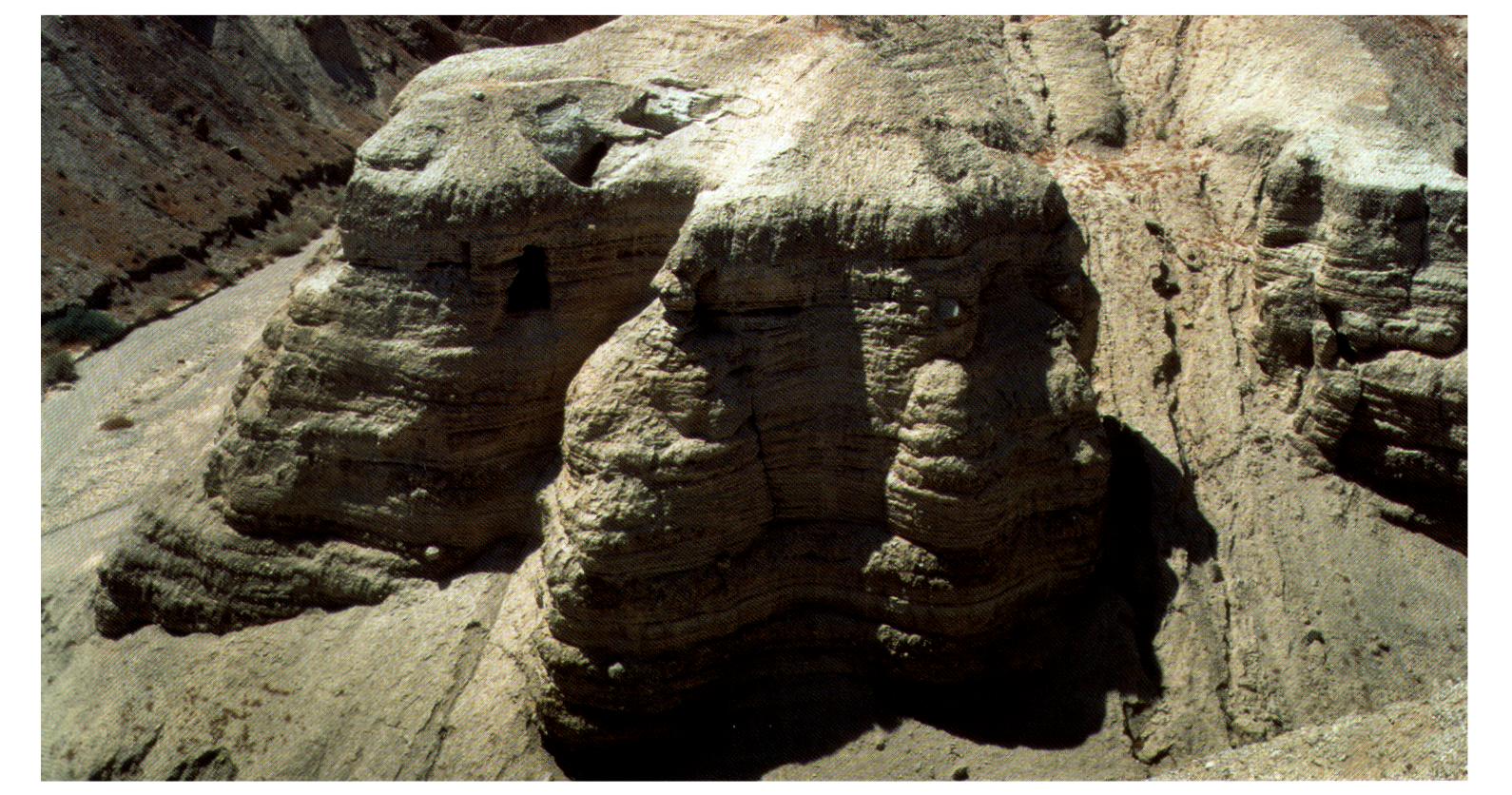
The Dead Sea Scrolls were one of the great archaeological discoveries of the 20th century, yet it has taken till the 21st century for their importance and relevance to be fully recognised and understood.
That it has taken over 50 years to get the scrolls into the public domain is a scientific scandal, but not, on balance, a moral one. The initial organisation for recovering, restoring and translating the material may have been amateur or even incompetent but it seems to me it was not corrupt. It may have been Catholic dominated, but this incompetence was not the sole province of the Catholic Church. But happily we can now put that behind us, and marvel at the wealth of data that we can now study.
It is hard to underestimate the importance of the scrolls; they give us is an alternative view of the traumatic years of Second Temple Judaism, a time that saw the birth of Christianity and the start of the Jewish Diaspora. As such they are unique and extraordinary documents. What they do not do is change anyone’s perception of their own religion. There are too many ambiguities for that.
As with all such discoveries, the first thing to do is to date them. Easier said than done. There are a number of methods of dating – using the writing style on the scrolls, using carbon 14 dating and considering the accompanying archaeological data, particularly coins. The first method assumes that writing styles change predictably over the years – but there are problems with getting too specific; for instance there is clearly a discrepancy between an older scribe writing in an older style, to a young man doing things the latest way… Carbon 14 dating is not a foolproof system, as it needs to be ‘calibrated’ and it is also destructive. Examining the surrounding archaeology to date the scrolls assumes that the scrolls are from the time of its surrounding artefacts, which may not be true if the scrolls cache was actually some sort of library, gathered over perhaps a hundred years. Not easy then, but the evidence overall suggests that the scrolls were written between 200 BCE and 30 BCE. A wide timescale perhaps, but all post Maccabaean revolt and pre-early Christian.
This was a time of great unrest for the Jewish peoples. For much of that time they were under the domination of the Seleucid Kings who frequently attempted to force ‘Hellenisation’ upon the Jews. Attempts by various Kings (High Priests since the Hasmonaeans had subverted the title) to play off the Seleucids against the Romans were to eventually mean exchanging Seleucid Rule for Roman. An independent Judaic nation was a long way off for virtually this entire period.
Before the Babylonian exile (approx 500 BCE) the Jews believed that these bad experiences were punishments from God for the people not believing devoutly enough. Now it began to seem that whatever the Jewish nation did, bad tidings continued. Hence the concept of the Jewish Messiah was born, a Davidic leader who could lead the nation of Judea to independence and salvation. With God riding next to them…
Accounts of Jewish life at this time are scant, largely coming from either biblical sources, Josephus or Philo. The various Jewish groups are seen as the Pharisees, The Sadducees and the Essenes. However, this may well be a simplified story. It seems that all these major groupings were subdivided in many ways, and that Essene groups ranged from the pious, to the revolutionary. Whether or not we are right to call the Qumran community – those that lived at the settlement where the scrolls were found - Essene is not clear, but they were a religious group who for whatever reason had abandoned Jerusalem in order to meditate and pray/fight for their particular salvation.
The texts fall broadly in two categories – books of the Torah, or documents relating to the Qumran community. Of the biblical texts found, the majority are of versions of Isaiah and the psalms – particularly popular texts for messianic groups, and Isaiah is frequently used by the early Christian Church to support their claim for Yeshua (Jesus) to be the Messiah. The texts include several of a completely unknown type, called Peshers. These are texts interpreting ancient prophetical works in terms of contemporary events. Clearly this form of writing is not dissimilar to some of the arguments in the synoptic gospels. Then there are the internal scrolls that deal with the internal workings of the group., Fascinating though they may be, they are difficult to interpret because of their use of code. They are full of references to The Teacher of Righteousness, the wicked priest or the spouter of lies.
Whether Monastic outcasts or zealot-fighters, the major buildings at Qumran seem to have suffered a violent upheaval. The evidence suggests a major fight including fire and destruction. Large numbers of bodies, men, women and children, are found laid out in formal cemeteries, but all dating from the same time. Again there is dispute as to when that time was – possibly around the time of the first Jewish Revolt – 60CE – or of the final Jewish revolt and the destruction of Jerusalem – 135 CE. All scenarios are possible, from the community being arbitrarily flattened by the exasperated Romans to the clearly well fortified buildings being a last stand by Jewish zealots, Massada style.
If at present there are no clear conclusions, the scrolls certainly provide a great deal of information from a fascinating, but little illuminated time. While it seems possible that the people of Qumran may have had contact with early Christians, it certainly shows that Jesus’ thinking was not so far from those of other groups at that time. It is also an insight into the tensions of Judaism and just how broad a range of beliefs Judaism could encompass.
There are no shortage of books maintaining that Jesus/John the Baptist/James Jesus’ Brother were members of the Qumran community, that the Teacher of Righteousness/Spouter of Lies/Wicked priest was actually Jesus/John/James/Herod/Caesar; all such speculations are fascinating, but not really convincing or relevant. We have plenty to learn form the scrolls and much to understand. Over time we may be able to put flesh on these strange characters, but for the moment let us just enjoy the mysteries which have improbably survived the past 2000-odd years.
Books:
The Dead Sea Scrolls – Stephen Hodge
The Hidden Scrolls – Neil Asher Silberman